 29 November 2025
 Share
Share
1

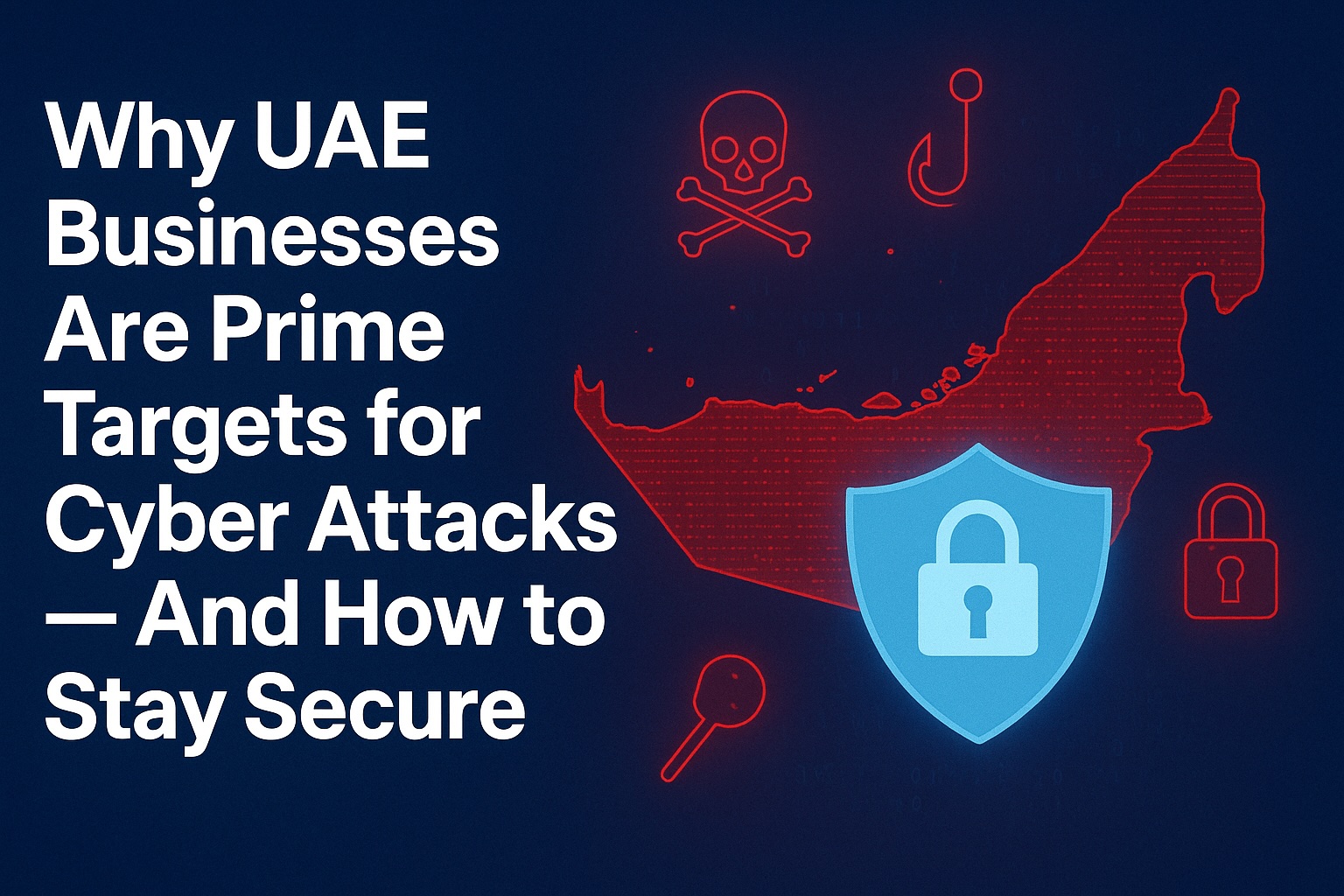
The UAE’s rapid digital growth has made it one of the most technologically advanced markets in the world. However, this digital progress has also placed UAE businesses—large and small—directly in the crosshairs of cybercriminals. With cyber-attacks becoming more frequent, sophisticated, and damaging, companies in Dubai, Abu Dhabi, and across the UAE must prioritize cybersecurity as a top business concern.
In this blog, we’ll explore why UAE businesses are major targets and what organizations can do to stay secure in 2025 and beyond.
The UAE is accelerating digital adoption across all industries—finance, retail, real estate, logistics, and government.
While this brings efficiency, it also expands the attack surface, giving hackers more entry points through:
Businesses embracing digital systems without proper cybersecurity frameworks become easy targets.
The UAE is a regional hub for:
These industries process high-value transactions and sensitive data, making them lucrative targets for ransomware groups, phishing attackers, and data thieves.
Since 2020, remote work has grown significantly in the UAE. Employees often connect from:
Hackers exploit these vulnerabilities to infiltrate corporate networks.
Initiatives like Dubai Smart City, AI-powered services, and IoT-based systems create convenience—but also risk.
IoT devices often lack enterprise-grade security, giving hackers an easy backdoor into networks.
According to global cybersecurity reports, over 80% of data breaches begin with human error.
Attackers rely on:
Many employees in the region still lack cybersecurity training, making this the most exploited vulnerability.
Hackers encrypt company data and demand payment in cryptocurrency.
These attacks are increasing rapidly in the UAE due to high-value business operations.
Fake emails impersonating:
These aim to steal login credentials or infect devices with malware.
Cybercriminals impersonate CEOs or finance teams to request fraudulent wire transfers.
Attackers overload a company’s server, taking websites and applications offline—common among e-commerce and service-based UAE businesses.
Misconfigured cloud environments can expose sensitive data publicly.
A modern cybersecurity stack should include:
These solutions help detect, prevent, and respond to threats in real time.
Cybersecurity awareness training should cover:
When employees become the first line of defense, cyber risks drop dramatically.
Adding an extra verification layer protects accounts even if passwords are compromised.
Businesses should perform:
This ensures that potential vulnerabilities are discovered before attackers find them.
Daily automated backups stored in secure locations help businesses recover quickly after a ransomware attack or data loss incident.
Most UAE businesses do not have an in-house security team. A managed IT & security provider can help with:
This ensures that security is always active—24/7/365.
Cyber-attacks in the UAE are becoming more aggressive, more frequent, and more financially damaging. As businesses continue to embrace digital transformation, cybersecurity must become a strategic priority—not an afterthought.
By investing in strong security infrastructure, employee training, and trusted IT partners, UAE companies can protect their data, reputation, and operations while continuing to grow confidently in a digital economy.