 10 January 2026
 Share
Share
1

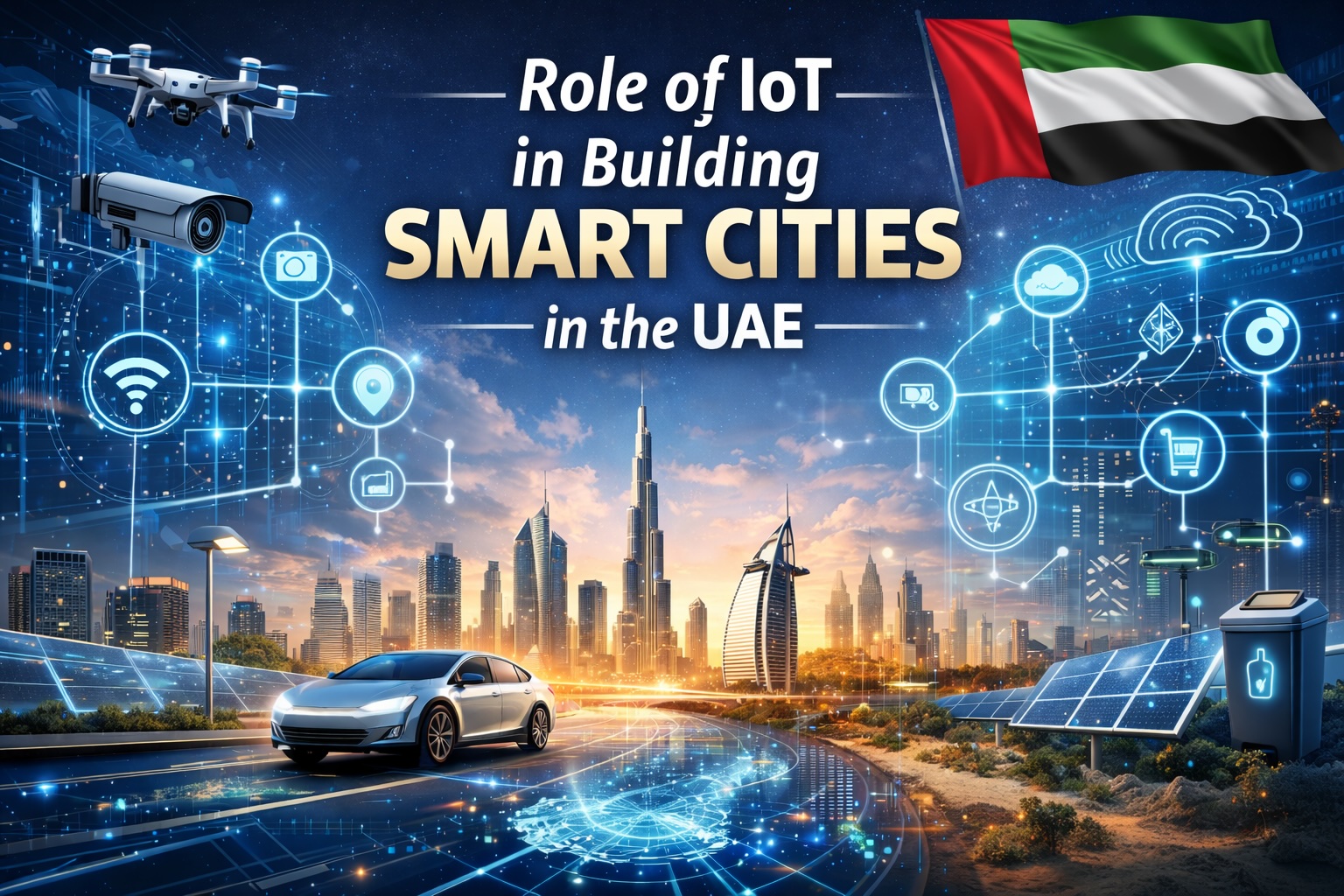
The United Arab Emirates is leading the global shift toward smart cities, driven by advanced digital technologies and forward-thinking government initiatives. At the core of this transformation lies the Internet of Things (IoT)—a network of connected devices, sensors, and systems that collect and analyze data in real time. IoT is enabling the UAE to build smarter, safer, and more sustainable urban environments.
As cities like Dubai and Abu Dhabi continue to evolve, IoT plays a critical role in improving infrastructure, public services, transportation, and quality of life.
The UAE’s smart city initiatives align with national strategies such as UAE Vision 2031, Dubai Smart City, and Smart Abu Dhabi. These programs aim to enhance efficiency, sustainability, and citizen happiness through digital transformation.
IoT technologies support these goals by enabling:
IoT sensors, cameras, and connected traffic systems help manage congestion and improve road safety. Real-time traffic monitoring, smart parking solutions, and AI-powered traffic signals reduce travel time and fuel consumption in UAE cities.
Connected public transportation systems also enhance commuter experience and operational efficiency.
IoT enables efficient management of electricity, water, and gas through smart meters and connected grids. UAE municipalities and utility providers use IoT to:
This aligns with the UAE’s sustainability and clean energy goals.
From commercial towers to residential communities, IoT is transforming buildings into intelligent environments. Smart sensors control lighting, HVAC systems, security, and access management, improving comfort while reducing energy usage.
IoT-enabled predictive maintenance also extends the lifespan of critical infrastructure and reduces downtime.
IoT plays a vital role in enhancing public safety through connected surveillance systems, emergency response solutions, and environmental sensors. Smart cameras, facial recognition, and real-time monitoring help authorities respond faster to incidents and improve overall urban security.
Smart waste bins equipped with IoT sensors optimize collection routes and reduce operational costs. Environmental sensors monitor air quality, noise levels, and weather conditions, supporting healthier and more sustainable cities across the UAE.
Implementing IoT solutions delivers multiple benefits for governments, businesses, and residents, including:
IT companies play a crucial role in designing, deploying, and managing IoT solutions for smart cities. From IoT consulting and system integration to custom software development and cloud platforms, experienced IT service providers help governments and enterprises implement scalable and secure IoT ecosystems.
Key services include:
While IoT adoption continues to grow, challenges such as data security, interoperability, and large-scale system management remain. However, with continuous investments, strong regulatory frameworks, and public-private collaboration, the UAE is well-positioned to overcome these challenges.
The future of smart cities in the UAE will be driven by IoT combined with AI, 5G, and cloud computing, creating intelligent, connected urban environments.
The Internet of Things is transforming how cities in the UAE are designed, managed, and experienced. By enabling real-time insights, automation, and sustainability, IoT is laying the foundation for world-class smart cities.
For government bodies and enterprises looking to implement smart city solutions, partnering with a trusted IoT and IT services company in the UAE is essential to ensure successful, secure, and scalable deployments.